
Executive Summary
- The first 180 days are the CAIO’s credibility window. They determine whether AI becomes an enterprise capability or remains a scattered portfolio of experiments.
- New CAIOs inherit enthusiasm, vendor pressure, board attention, uneven data readiness, unclear accountability, and fast-moving experimentation across the business.
- The fastest path to executive trust is not a broader AI tool inventory. It is clarity about which decisions AI will influence, who owns outcomes, how risk is governed, and what evidence proves AI is operating responsibly.
- CAIOs create momentum when they connect AI strategy, data readiness, governance, decision rights, risk ownership, transparency, traceability, and adoption into one executive operating model.
The CAIO’s first mandate is not to promote AI activity. It is to make AI adoption accountable, defensible, and ready to scale.
The first 180 days are a credibility window
Every new Chief AI Officer inherits two AI organizations at once: the formal AI agenda described in executive updates, and the informal spread of pilots, vendor tools, embedded features, shadow experimentation, and business-unit initiatives already shaping behavior.
That is why the first 180 days matter. They are not simply a period to learn the landscape. They are the window in which the CAIO establishes whether AI leadership will be strategic, operational, and trusted, or reactive, fragmented, and constantly chasing risk.
A new CAIO does not need to stop experimentation. But the CAIO does need to create early clarity about which AI use cases matter most, which decisions AI will influence, who owns outcomes, where human judgment remains essential, and how the organization will preserve evidence when outcomes are questioned.
Why 180 days, not 90
The usual executive transition frame is the first 90 days, inherited from general leadership onboarding. For a CAIO, 90 days is enough to survey the AI landscape and meet stakeholders. It is rarely enough to define decision rights, establish risk ownership, and build the trust architecture that lets AI scale safely. Those foundations take longer to set than first impressions do. The first 180 days are the horizon in which a CAIO moves from scattered experimentation to an AI operating model the enterprise will actually support.
The mistake: starting with tools instead of decisions
Many CAIO transitions begin with tool inventories, model reviews, vendor assessments, acceptable-use policies, innovation pipelines, and committee structures. Those activities are necessary, but they do not answer the executive question that matters most.
Can the enterprise explain, control, and defend the decisions AI now influences?
AI governance changes when AI moves from productivity support to operational decisions. A chatbot that summarizes a document creates one level of risk. An AI system that shapes credit, hiring, pricing, fraud, claims, compliance, customer response, supply chain action, or clinical prioritization creates a different leadership problem entirely.
The CAIO who starts only with tools may document activity. The CAIO who starts with AI-influenced decisions begins to build enterprise control.
What new CAIOs inherit now
The CAIO role is emerging at a difficult moment. Boards want confidence. CEOs want value. Business leaders want speed. Legal, risk, compliance, security, technology, and data leaders want control. Employees are already experimenting faster than governance can adapt.
At the same time, many CAIOs inherit uneven data foundations, unclear model ownership, fragmented AI policies, vendor complexity, immature monitoring, uncertain escalation paths, and ambiguity about who owns AI-influenced outcomes.
That creates the core transition risk: the CAIO is expected to accelerate AI adoption before the organization has defined the operating model required for AI to scale with accountability and trust.
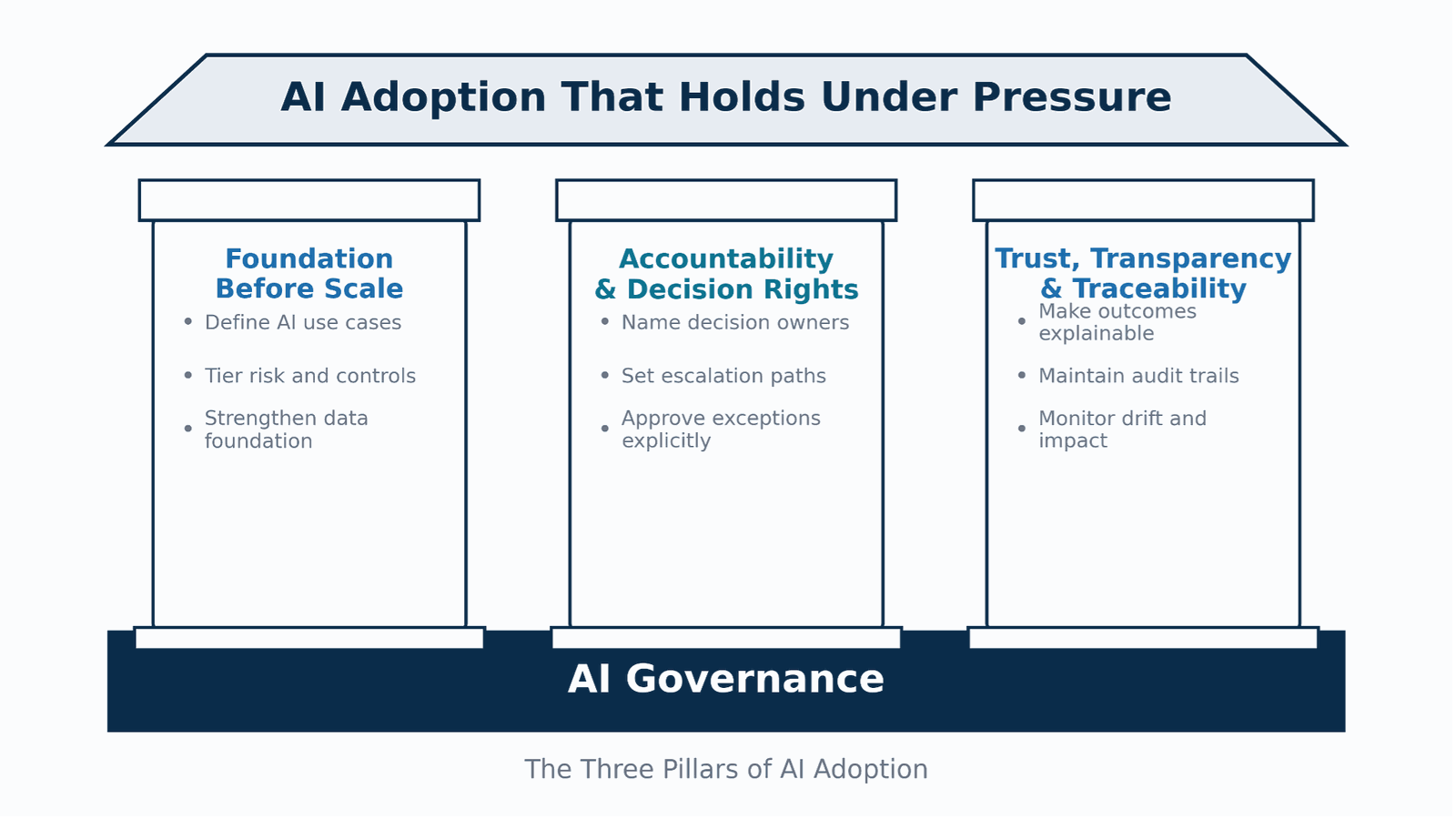
Figure 1. The Three Pillars of AI Adoption create the foundation for AI that holds under pressure.
A practical first-180-day agenda for CAIOs
A disciplined CAIO transition does not require the new AI leader to solve every AI issue at once. It requires a sequence that builds executive confidence while separating strategic AI adoption from scattered experimentation.
Days 1 to 30: Clarify the executive mandate
Determine what the CEO, board, CIO, CDO, legal, risk, compliance, security, and business leaders actually expect from the CAIO role. Identify where expectations conflict and where AI leadership is being asked to absorb unresolved organizational ambiguity.
Days 31 to 60: Build the AI use case and decision inventory
Identify AI activity already underway, then distinguish between tools, models, workflows, and the decisions AI influences. Prioritize high-impact, externally visible, regulated, customer-facing, or easily challenged decisions.
Days 61 to 90: Define governance and decision rights
Clarify who owns AI-influenced outcomes, who can approve use, who may override AI-supported decisions, how escalation works, and what evidence is required for defensibility.
Days 91 to 120: Assess foundation readiness
Evaluate whether data, platforms, integration, metadata, lineage, privacy, security, monitoring, and operating discipline are strong enough to support AI beyond pilots.
Days 121 to 180: Commit to an enterprise AI adoption roadmap
Translate findings into a focused roadmap that ties AI value, risk-tiered governance, decision ownership, trust architecture, and executive reporting into one scalable operating model.
Why CAIO success depends on decision-layer governance
AI governance cannot remain only at the tool layer. Tool inventories, model reviews, acceptable-use policies, vendor assessments, and approval workflows are necessary controls, but they do not make AI adoption defensible by themselves.
When AI influences decisions, governance must define accountability before scale. The enterprise needs named decision owners, evidence standards, override and escalation rights, human review requirements, audit trails, monitoring, and clear risk ownership.
This is where the CAIO can create executive advantage. By moving AI governance from the tool layer to the decision layer, the CAIO helps the organization move faster because leaders trust the structure around the decision.
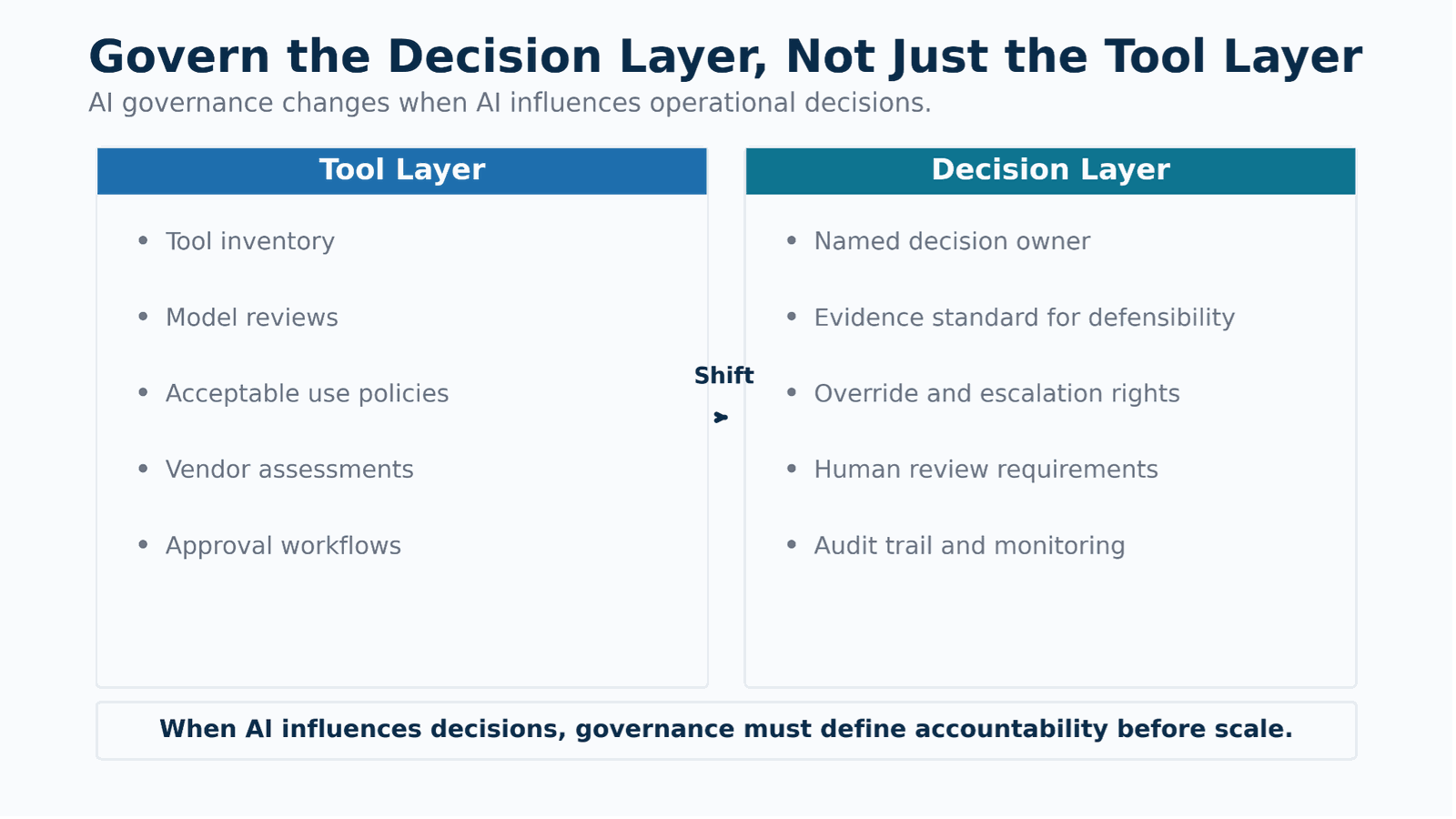
Figure 2. Govern the decision layer, not just the tool layer.
The first-180-day CAIO diagnostic
A CAIO who wants to create confidence quickly should begin with sharper questions. These questions reveal whether the enterprise has an AI strategy problem, a governance problem, a data readiness problem, or a decision authority problem hiding underneath the AI agenda.
- Which AI use cases are already influencing, recommending, prioritizing, or automating enterprise decisions?
- Which AI-influenced decisions are high impact, externally visible, regulated, customer-facing, operationally critical, or likely to be challenged?
- Who owns the outcome when AI influences a decision?
- What data sources, assumptions, controls, and evidence standards must be in place before scale?
- Who can override an AI-supported decision, under what conditions, and how is that override recorded?
- How will the organization monitor drift, bias signals, performance degradation, adoption behavior, and business impact?
- Can the enterprise reconstruct an AI-influenced decision months later under audit, litigation, regulatory review, or board scrutiny?
AI governance that holds under pressure is designed around decisions, not tools alone.
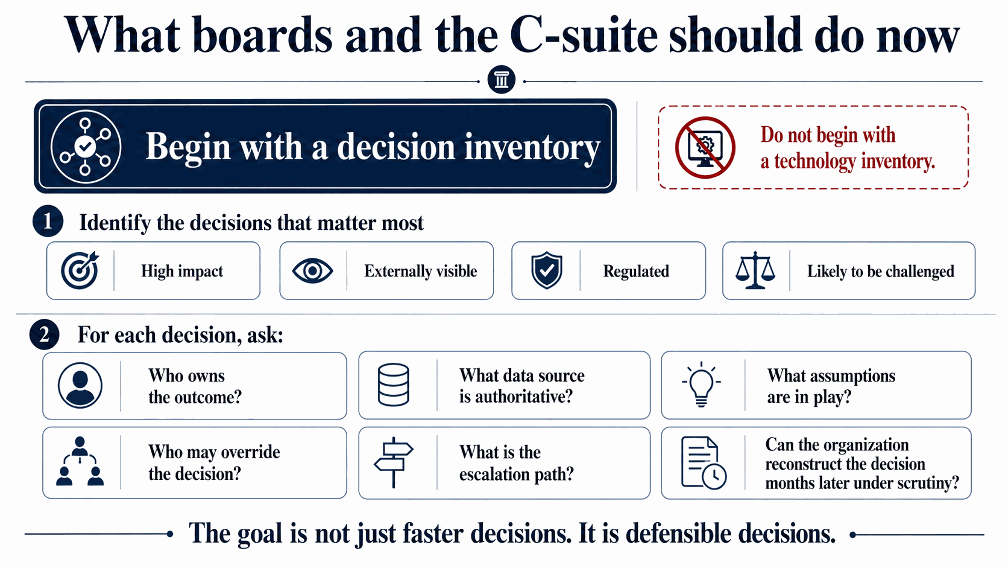
Figure 3. Begin with a decision inventory before AI scales.
How new CAIOs create momentum without becoming the AI police
The first 180 days are not the time for the CAIO to become the enterprise blocker for every AI idea. That path turns AI governance into a bottleneck and makes the role appear defensive before it becomes strategic.
The CAIO creates momentum by establishing where AI can safely move fast, where risk requires stronger controls, where the data foundation is not ready, and where decision ownership must be explicit before scale.
The best CAIO transitions create a different kind of confidence. Business leaders understand where AI can create value. Technology and data leaders understand what foundations must be strengthened. Risk, legal, compliance, and security leaders understand how evidence will be preserved. The board understands how AI is being scaled with control, not just enthusiasm.
What boards and CEOs should expect from a new CAIO
A strong CAIO should not spend the first 180 days simply reporting on pilots, tools, vendors, or policies. Boards and CEOs should expect a clear view of the AI decisions that matter most, the ownership model behind them, the risks that could undermine trust, and the roadmap required to scale AI responsibly.
The CAIO should be able to explain not only what AI activity exists, but which enterprise decisions AI is beginning to shape. That is where the role becomes essential.
From transition to trusted AI leadership
The first 180 days determine whether the CAIO inherits scattered AI activity or turns it into an enterprise capability. The most successful CAIOs do not wait for AI clarity to emerge from pilots, policies, or vendor roadmaps. They create it.
They identify the decisions AI will influence, define who owns outcomes, strengthen the foundation before scale, and create trust through transparency, traceability, monitoring, and defensible evidence. The same decision-layer logic is explored in The Three Pillars of AI Adoption and across our AI governance work.
AI leadership succeeds when strategy, governance, data readiness, decision rights, risk ownership, and trust operate as one agenda. That is how a new CAIO turns AI ambition into enterprise momentum.
For executives navigating this transition directly, the CAIO First 180 Days Advisory provides independent counsel through the first six months.