
Executive Summary
- The first 180 days are not a passive onboarding period. They are the CIO’s credibility window.
- New CIOs inherit modernization pressure, operational debt, vendor complexity, AI expectations, cybersecurity exposure, and competing business demands.
- The fastest path to executive trust is not a broader project inventory. It is clarity about priorities, decision rights, ownership, evidence, and escalation.
- CIOs create momentum when they connect modernization, data readiness, AI governance, and execution discipline into one leadership agenda.
The CIO’s first mandate is not to know everything. It is to determine what must be decided, who has the authority to decide it, and what must be true for the decision to hold.
The first 180 days are a credibility window
Every new CIO inherits two organizations at once: the technology organization that appears on the operating model, and the informal system of workarounds, escalations, vendor dependencies, data quality issues, and unresolved decisions that actually determine speed.
That is why the first 180 days matter so much. They are not simply a period to listen, learn, and meet stakeholders. They are the window in which the CIO establishes whether technology leadership will be reactive or agenda-setting.
A new CIO does not need to solve every inherited issue immediately. But the CIO does need to create early clarity about what matters most, what risks are real, what decisions are stuck, and where enterprise momentum is being lost.
Why 180 days, not 90
The familiar executive transition frame is the first 90 days, borrowed from general leadership onboarding. For a CIO, 90 days is enough to form impressions and meet stakeholders. It is rarely enough to reset modernization priorities, untangle inherited delivery commitments, and establish the decision authority technology leadership depends on. Those shifts surface slowly and hold only when the operating model behind them is clear. The first 180 days are the horizon in which a CIO moves from diagnosis to a technology agenda the business will actually support.
The mistake: jumping into activity before diagnosing authority
Many CIO transitions begin with project reviews, budget reviews, application inventories, vendor assessments, and platform briefings. Those activities are necessary, but they are not sufficient. They tell the CIO what exists. They do not always reveal why progress is slow.
The deeper issue is often not technology. It is decision authority. Modernization stalls when no one can make binding tradeoffs. AI initiatives slow when the enterprise cannot name authoritative data sources. Cybersecurity risk grows when accountability is distributed but not owned. Delivery confidence erodes when escalation paths are political instead of explicit.
The CIO who starts only with a technology inventory may inherit the organization’s existing ambiguity. The CIO who starts with a decision inventory begins to expose the operating model underneath the project portfolio.
What new CIOs inherit now
The CIO role has expanded. Boards and executive teams now expect technology leaders to support enterprise resilience, reduce risk, modernize platforms, control spend, enable AI, improve data readiness, strengthen cybersecurity, and help the business move faster.
At the same time, many CIOs inherit fragmented architectures, inconsistent data ownership, cloud and vendor sprawl, underperforming programs, unclear delivery commitments, and business expectations shaped by AI enthusiasm rather than operating readiness.
The result is a dangerous transition pattern: the CIO is expected to accelerate before the enterprise has clarified the decisions, ownership model, and foundation required for durable execution.
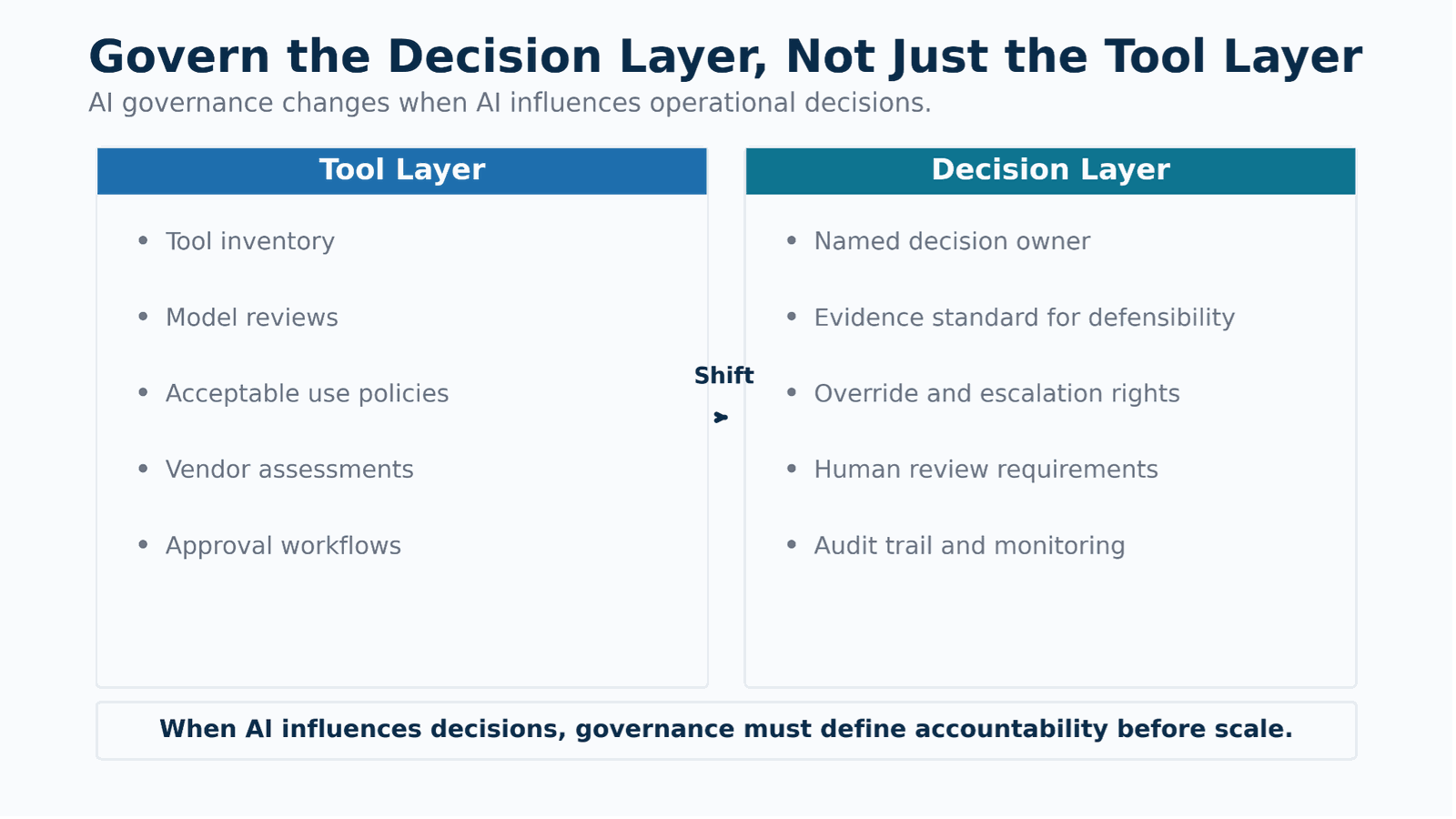
Figure 1. Govern the decision layer, not just the tool layer.
A practical first-180-day agenda for CIOs
A disciplined CIO transition does not require a 50-page transformation plan in the first month. It requires a sequence that builds executive trust while exposing the real constraints on speed.
Days 1 to 30: Clarify the executive mandate
Determine what the CEO, board, and executive team actually expect. Identify where expectations conflict and where technology is being asked to absorb business ambiguity.
Days 31 to 60: Diagnose the decision layer
Identify the decisions that drive modernization, AI readiness, cybersecurity risk, data quality, and business execution. Clarify who owns them and where escalation ends.
Days 61 to 90: Stabilize visible risks
Surface the inherited risks most likely to damage credibility: fragile platforms, underperforming vendors, exposed controls, unclear delivery commitments, and ungoverned AI activity.
Days 91 to 120: Reset modernization and AI readiness
Separate strategic modernization from inherited activity. Align data, architecture, governance, and platform priorities to the business decisions that matter most.
Days 121 to 180: Commit to an executive roadmap
Translate findings into a focused roadmap that the CEO, board, and executive peers can understand, support, and use to measure progress.
Why CIO success now depends on AI and data readiness
AI has changed the CIO transition. A CIO can no longer separate modernization from data readiness or data readiness from governance. AI adoption exposes weak definitions, fragile integrations, unclear ownership, and inconsistent evidence standards faster than traditional technology programs ever did.
The question for the CIO is not whether the organization has AI use cases. Most do. The more important question is whether the enterprise has the foundation, accountability model, and trust architecture to scale those use cases without creating risk, rework, and executive hesitation. These are the same pillars explored in The Three Pillars of AI Adoption.
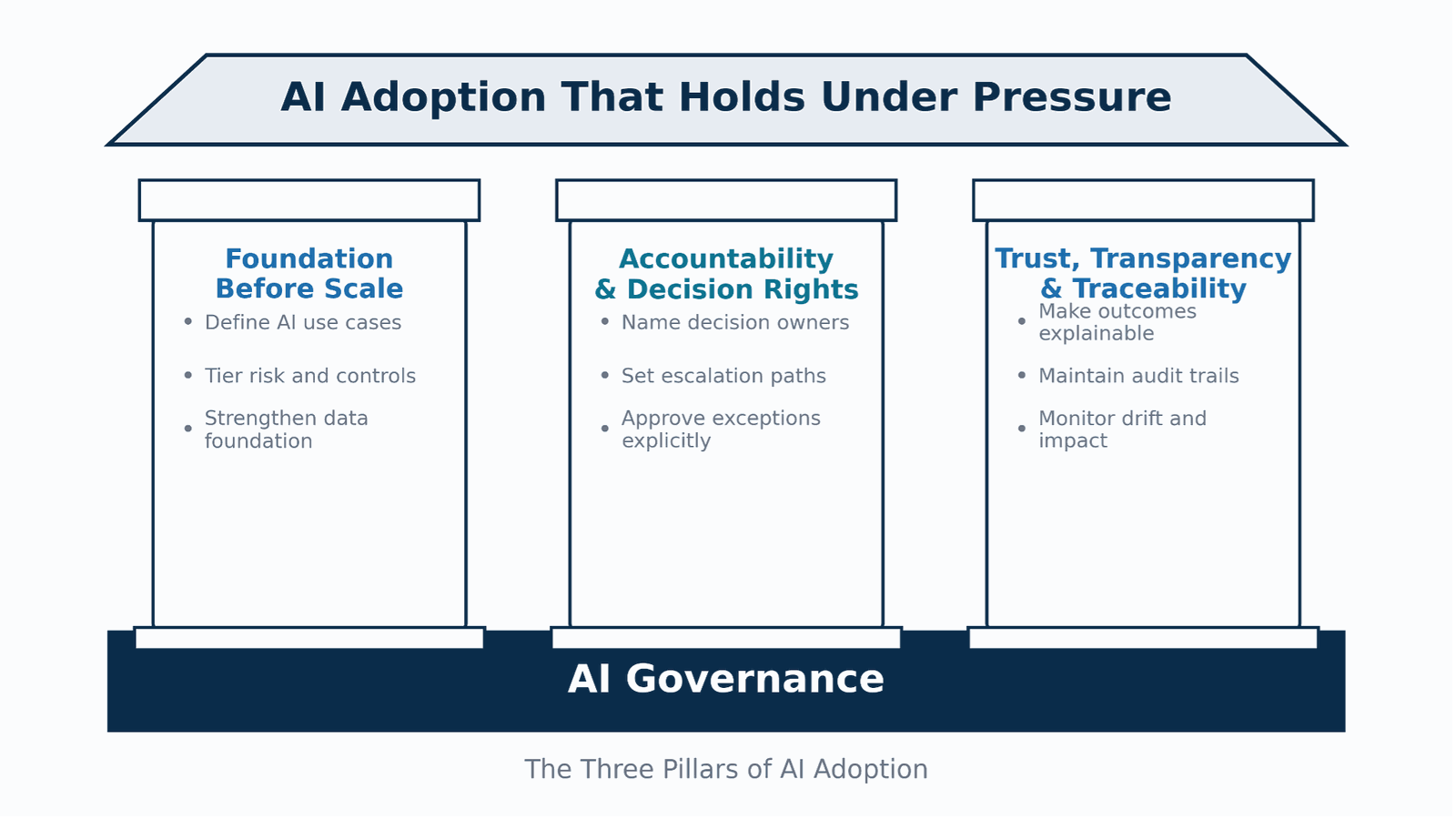
Figure 2. Three pillars that help AI adoption hold under pressure.
The first-180-day CIO diagnostic
A CIO who wants to move fast should begin by asking sharper questions. These questions reveal whether the organization has a technology problem, a governance problem, a data problem, or a decision problem hiding underneath the portfolio.
- Which technology initiatives are truly strategic, and which are inherited activity?
- Where do modernization decisions stall because ownership or funding authority is unclear?
- Which platforms, vendors, or delivery commitments create the greatest executive exposure?
- Which data domains are most critical to AI readiness, regulatory confidence, or business performance?
- Where do cybersecurity, resilience, or operational risks require immediate executive visibility?
- Who owns decisions when technology, data, risk, finance, legal, and the business disagree?
- What evidence would prove, six months from now, that the CIO’s agenda is creating momentum?
Clear decision authority removes more friction than another layer of governance activity ever will.
How new CIOs create momentum without inheriting every problem
The first 180 days are not the time to become the owner of every unresolved technology issue. They are the time to establish the operating conditions for progress.
That means naming the few enterprise decisions that matter most, clarifying where authority sits, surfacing risk before it becomes a surprise, and aligning modernization to business outcomes. The CIO earns trust not by promising that every problem will be fixed immediately, but by showing that the agenda is disciplined, defensible, and tied to enterprise value.
The best CIO transitions create a new kind of confidence. Business leaders understand what technology can enable. The board understands the risk and investment logic. The executive team understands which decisions require alignment. Technology teams understand what will be prioritized and why.
What boards and CEOs should expect from a new CIO
A strong CIO should not spend the first 180 days simply reporting on projects. Boards and CEOs should expect a clear view of inherited risk, modernization priorities, AI and data readiness, operating model gaps, and the decisions that must be made to increase enterprise speed.
The CIO should be able to explain not only what the technology organization is doing, but what the enterprise needs to decide. That is where the role becomes strategic.
From transition to trusted technology leadership
The first 180 days determine whether the CIO inherits the existing agenda or resets it. The most successful CIOs do not wait for clarity to arrive. They create it.
They identify the decisions that matter, expose the operating model friction that slows execution, strengthen the foundation for AI governance and data-driven work, and build confidence with the CEO, board, and executive team.
Technology leadership succeeds when modernization, governance, AI readiness, and decision authority operate as one agenda. That is how a new CIO turns transition into enterprise momentum.
For executives navigating this transition directly, the CIO First 180 Days Advisory provides independent counsel through the first six months.