
Executive summary
Data governance has evolved from controlling data assets to governing the enterprise decisions those assets make possible. For boards and the C-suite, the question is no longer whether the organization has policies, stewards, or a council. The question is whether ownership, authority, evidence, and escalation are designed clearly enough to hold when a consequential decision is challenged.
For much of its history, data governance was treated as a specialist discipline. It sat near data architecture, metadata, quality, security, or compliance. Its work was important, but its language and operating mechanisms were usually designed for practitioners rather than governing bodies.
That is no longer sufficient. Data now shapes pricing, credit, clinical decisions, supply chains, workforce actions, capital allocation, customer treatment, regulatory reporting, and AI-enabled operations. A weakness in data governance can become a weakness in executive judgment. A gap in ownership can become a board-level exposure. A disputed definition can delay a strategic decision, trigger rework, or undermine confidence in an AI system.
The evolution of data governance is therefore not simply a progression from centralized to decentralized models, or from manual controls to automated tools. It is a change in purpose. Governance began by controlling data. It matured by standardizing the enterprise. It expanded by distributing ownership. Its next responsibility is to protect decision integrity at enterprise speed.
What the evolution of data governance actually means
The traditional definition of data governance remains useful. Organizations still need reliable definitions, quality controls, metadata, lineage, access rules, privacy safeguards, stewardship, and architecture. Those capabilities are foundational. They help leaders understand what data exists, what it means, where it came from, and whether it is fit for use.
But foundations are not the same as governance outcomes. A catalog can show lineage without resolving who has authority to accept a quality risk. A council can review standards without owning the consequence of a delayed or disputed decision. A data owner can be named on a chart while lacking the authority, funding, or executive support required to act.
This is why the discipline has moved closer to corporate governance. ISO/IEC 38505-1 explicitly treats the governance of data as a domain of organizational or corporate governance and frames its guidance for governing bodies and executive managers, not only technical teams. That is an important signal. The governance of data belongs wherever the consequences of its use are owned.
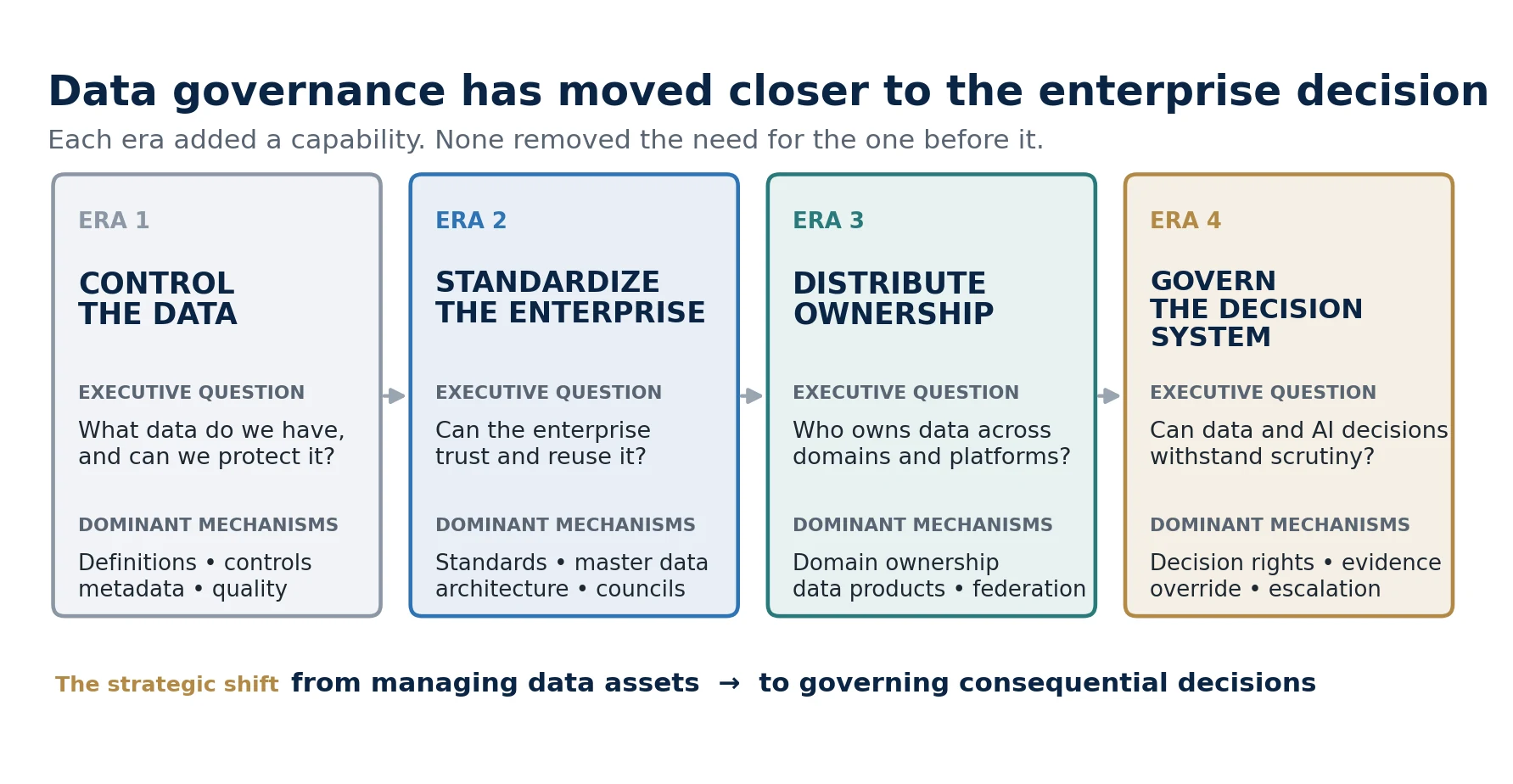 Figure 1. Four eras of data governance. Original framework by Dr. David Marco.
Era 1: Control the data
The earliest enterprise governance efforts grew out of a practical need for control. Organizations needed consistent definitions, protected access, reliable records, quality rules, and a clearer understanding of where data lived. Governance was closely associated with database administration, information architecture, records management, security, and compliance.
The dominant executive question was straightforward: What data do we have, and can we protect and trust it? The mechanisms were equally direct: standards, metadata, controls, stewardship, and quality management.
This era created essential disciplines, many of which remain non-negotiable. Its limitation was organizational. Governance was often seen as work performed on data by technical or control functions, rather than as a system for resolving business decisions. The enterprise could improve data definitions without clarifying who had authority when definitions, priorities, or risk tolerances conflicted.
Era 2: Standardize and scale the enterprise
As organizations integrated functions, consolidated reporting, expanded analytics, and modernized enterprise platforms, the governance problem became larger. Local definitions and isolated controls could not support shared customers, products, suppliers, financial measures, or risk views. The enterprise needed common standards, master data, reference data, shared models, and repeatable decision forums.
The executive question changed: Can the enterprise trust and reuse data across functions? Governance councils, enterprise standards, data-quality programs, and formal stewardship models expanded in response.
This era helped organizations move beyond isolated systems. It also produced a familiar failure mode. Central teams accumulated responsibility without enough authority to change business behavior. Committees became places where issues were discussed, deferred, or escalated, but not always resolved. Governance looked mature because activity was visible. The hard question remained unanswered: Who owns the consequence when the enterprise standard conflicts with a business unit’s immediate objective?
Era 3: Distribute ownership without losing control
Cloud platforms, self-service analytics, data products, and domain-oriented operating models made purely centralized governance increasingly difficult to scale. The enterprise needed decisions closer to the business, where context and accountability were strongest. Federated approaches became attractive because they combined common enterprise guardrails with local ownership.
The executive question became: Who owns data across domains, products, platforms, and functions? The operating mechanisms expanded to include domain ownership, product accountability, shared platform controls, enterprise policies, and local implementation authority.
Federation is often the right direction, but it is not a complete governance design. Distributing responsibility without defining decision rights simply distributes ambiguity. A domain owner who cannot resolve a cross-domain conflict is a coordinator, not an owner. An enterprise standard that can be ignored without a recorded exception is a preference, not a control. Federation works only when the organization defines which decisions are local, which are enterprise-wide, who can grant an exception, and where escalation ends.
Era 4: Govern the decision system
The AI era changes the unit of governance. Data remains the foundation, but the consequence now appears in decisions that may be automated, accelerated, repeated, and distributed across the enterprise. Governance must connect the data, model, process, control, business owner, and outcome.
The executive question is no longer only whether the data is accurate. It is whether a data-informed or AI-influenced decision can withstand scrutiny. Who owns the outcome? Which source is authoritative? What assumptions were active? Who can override the decision? What evidence is preserved? When does the issue reach the executive team or board?
This is the point at which data governance, AI governance, modernization, privacy, cybersecurity, risk, and business accountability become one decision system. Separate programs may still exist, but they cannot operate as separate answers to the same enterprise consequence.
The strategic shift
The evolution of data governance is not a journey from centralized to decentralized. It is a journey from managing data as an asset to governing the decisions that data and AI make possible.
Why traditional governance fails under pressure
Most governance programs do not fail because every component is missing. They fail because the components do not form an operating model. The weaknesses become visible when a decision is urgent, contested, regulated, or externally challenged.
Policy without authority. The organization has documented standards, but no one has binding authority when a business unit chooses speed, revenue, or local convenience over the standard.
Stewardship without decision rights. Stewards are expected to fix enterprise data problems but cannot set priorities, compel action, assign funding, or resolve conflicts among senior stakeholders.
Metrics without consequence. Dashboards report issue counts, quality scores, policy adoption, or catalog coverage without showing which business decisions improved, which risks declined, or which delays were removed.
Federation without escalation architecture. Responsibility is distributed, but cross-domain disputes have no short, bounded, and final path to resolution.
Governance separated from modernization and AI. Platforms are modernized and AI use cases scale while ownership, evidence, override logic, and board visibility are designed later, often after trust has already been damaged.
These are not documentation gaps. They are leadership-design gaps. More committee activity will not solve them. More tooling may make the activity easier to observe, but it will not decide who has authority or who owns the result.
A modern data governance framework for the C-suite
In my experience, durable governance rests on three linked conditions: foundation, accountability, and trust. Each condition answers a different executive question. Together, they determine whether the enterprise can act with confidence at speed.
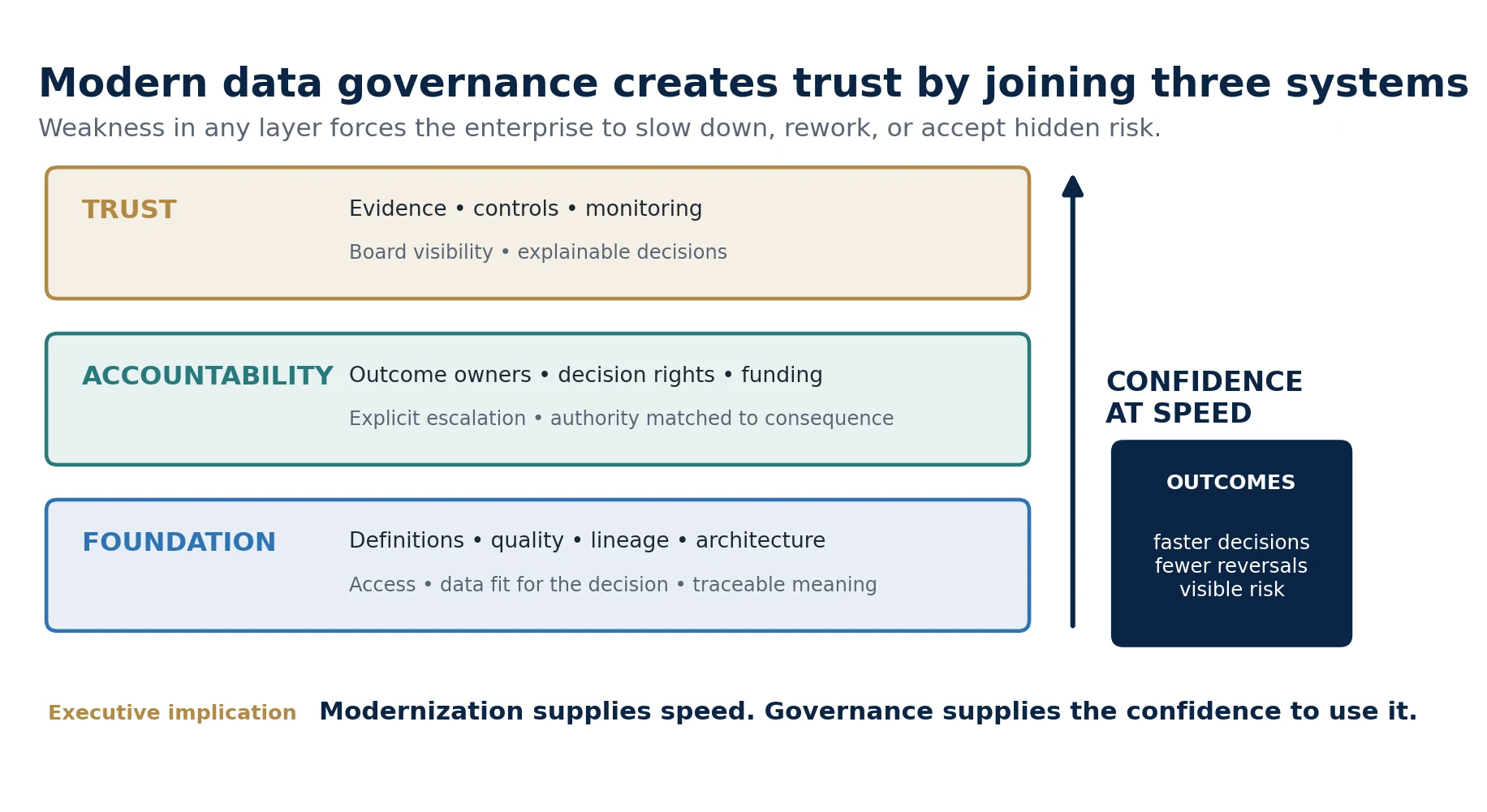 Figure 2. The modern data governance system. Original framework by Dr. David Marco.
Foundation: Is the data fit for the decision?
Foundation includes definitions, metadata, quality, lineage, architecture, access, privacy, security, and the technical controls that make data understandable and usable. It answers whether leadership is looking at the right information, with the right context, at the right level of reliability.
Foundation work is indispensable, but its value must be tied to decisions. The objective is not perfect data everywhere. The objective is data that is fit for the material decision, with known limitations and an accepted owner for those limitations.
Accountability: Who owns the consequence and has authority to act?
Accountability connects responsibility to authority. It defines who owns the business outcome, who decides, who advises, who can approve an exception, who can pause or override the process, and where a conflict ends. It also addresses funding, mandates, and the relationship among enterprise and domain roles.
This is the layer most governance programs under-design. Participation is distributed across committees and functions, but ownership remains implied. Approval is mistaken for accountability. When the decision is challenged, everyone can explain their contribution and no one can explain who accepted the tradeoff.
Trust: Can the decision be explained, monitored, and defended?
Trust is not a sentiment. It is an operating result. It comes from evidence, traceability, controls, monitoring, exception records, transparent assumptions, and board-ready visibility. A trusted decision can be reconstructed later. Leadership can explain what data was used, what limitations were known, who had authority, why the decision was reasonable, and what would trigger an override.
When foundation, accountability, and trust are connected, governance becomes an accelerator. Fewer decisions are reopened. Fewer exceptions turn political. Leaders move faster because they know where authority sits and what evidence supports the choice.
Executive implication
The return on data governance is not more governance activity. It is fewer consequential decisions made twice.
How data governance connects to AI governance and modernization
AI has not made data governance obsolete. It has made weak data governance more consequential. The European Union’s AI Act, for example, requires data governance and management practices for datasets used in high-risk AI systems, including practices related to data collection, preparation, assumptions, suitability, gaps, and potential bias. The regulatory requirement is specific, but the executive implication is broader: the enterprise must understand how data choices shape outcomes.
The NIST AI Risk Management Framework similarly treats trustworthiness as something that must be incorporated throughout the design, development, use, and evaluation of AI systems. That lifecycle view cannot be delivered by an isolated model-review committee. It requires connected governance across data, technology, risk, legal, business operations, and executive ownership.
Modernization creates the same leadership issue from a different direction. New platforms increase access, integration, automation, and speed. They can improve the data foundation dramatically. But modernization does not decide who owns a cross-functional definition, who accepts a quality tradeoff, who approves an exception, or how a disputed outcome is escalated. Modernization supplies capacity. Governance determines whether the enterprise can use that capacity without losing control.
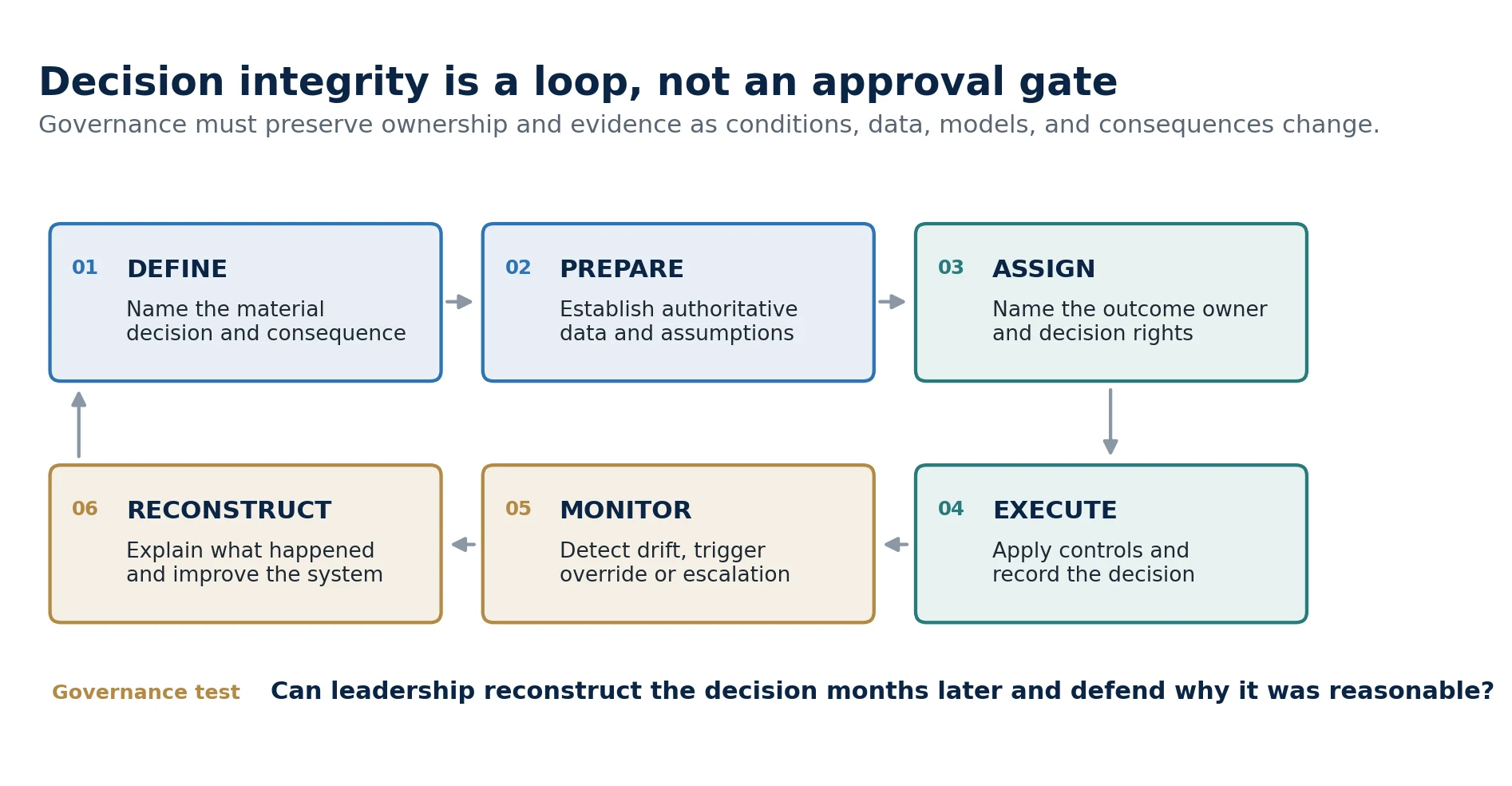 Figure 3. The decision integrity loop. Original framework by Dr. David Marco.
Seven questions every board and executive team should ask
Boards do not need to administer data governance. They do need confidence that management has designed it around enterprise consequences. The following questions expose whether governance is an operating model or an activity portfolio.
- Which decisions are material? Identify the decisions that affect customers, financial reporting, regulatory obligations, safety, strategic investment, reputation, or the ability to scale AI and modernization.
- Who owns the outcome? Name the executive or business owner accountable for the consequence, not merely the platform, model, dataset, or review process.
- What data and assumptions are authoritative? Define the source, quality threshold, meaning, lineage, limitations, and assumptions that make the decision supportable.
- Who has decision and override rights? Specify who decides, who advises, who can approve exceptions, who can pause execution, and who has final authority when functions disagree.
- What evidence is preserved? Maintain enough traceability to reconstruct the decision, including the data, controls, approvals, exceptions, assumptions, and ownership in effect at the time.
- Where does escalation end? Keep escalation paths short, bounded, and final. Governance becomes slow when the same conflict can be reopened in multiple forums.
- What must the board see? Escalate material exposures, persistent exceptions, unresolved ownership, control failures, and risk concentrations in business language tied to consequence.
What should change in the operating model
Start with a decision inventory, not a data inventory
A data inventory remains necessary for management and compliance. It is not the best starting point for executive design. Begin with the decisions whose failure, delay, or reversal would matter most. Then work backward to the data, models, controls, owners, evidence, and escalation paths those decisions require.
Match authority to accountability
Do not assign an owner who lacks the mandate, information, resources, or organizational standing to act. A useful governance design distinguishes responsibility for preparing a decision from authority to make it and accountability for the result.
Design federation explicitly
Federation should specify the boundary between enterprise and domain authority. Define which standards are binding, which decisions are local, how exceptions are granted, how cross-domain conflicts are resolved, and which issues reach an executive forum. Without these boundaries, federation becomes negotiated compliance.
Connect governance systems around the consequence
Data governance, AI governance, privacy, cybersecurity, risk, architecture, and modernization should not create competing ownership models for the same outcome. Connect them through common decision rights, evidence requirements, escalation routes, and executive reporting.
Measure decision performance, not governance motion
Activity measures have operational value, but they do not prove that governance is working. Track whether material decisions are made faster, whether fewer decisions are reversed or reargued, whether exceptions remain open, whether risk becomes visible earlier, and whether leaders can explain outcomes under scrutiny.
Make evidence usable by leadership
Evidence should not exist only in technical systems or committee minutes. For material decisions, management needs a concise, reconstructable record that translates data and control detail into business consequence. The board needs visibility into unresolved exposures, not a tour of governance activity.
The next era of data governance
The next era will not be defined by a new organizational label or a single technology architecture. It will be defined by whether governance can keep authority and evidence intact as decisions become faster, more automated, and more distributed.
The foundational disciplines will remain. Definitions, quality, metadata, lineage, architecture, stewardship, privacy, and security still matter. What changes is the standard by which they are judged. Their value is demonstrated when the enterprise can make a consequential decision once, act on it with confidence, monitor the result, and defend the reasoning later.
That is the modern mandate for data governance. It is not a documentation layer added to the enterprise. It is the leadership system that connects data to authority, authority to action, and action to accountable outcomes.
For boards and the C-suite, the final test is simple: when a data-informed or AI-influenced decision is challenged, can the organization explain what happened, who owned it, why it was reasonable, what evidence supported it, and how the system will respond if conditions change?
If the answer is clear before pressure arrives, governance is doing its job. If the answer must be reconstructed after the fact, the organization has governance activity, but not yet governance that holds.
Conclusion
Activity is not accountability. Modern data governance succeeds when leadership can make trustworthy, defensible decisions at enterprise speed.
For leaders who cannot afford to get it wrong
Dr. David Marco advises boards, CEOs, CIOs, CDOs, CAIOs, and executive teams on data governance, AI governance, modernization, decision rights, and enterprise accountability. For an independent assessment of whether your governance operating model can hold under pressure, explore the Executive Accountability Diagnostic or request an advisory conversation.
Sources and fact notes
- ISO/IEC 38505-1:2017, Governance of data. The standard provides guidance to governing bodies and executive managers and defines data governance within organizational or corporate governance.
- NIST AI Risk Management Framework. NIST describes the voluntary framework as a way to incorporate trustworthiness into the design, development, use, and evaluation of AI systems.
- EU AI Act, Article 10: Data and data governance. Article 10 specifies data governance and management practices for datasets used by high-risk AI systems, including data preparation, assumptions, suitability, gaps, and bias.
- Federal Data Strategy Data Governance Playbook. The playbook emphasizes authority, roles, organizational structures, resources, accountability, and integration with agency decision-making and operations.